

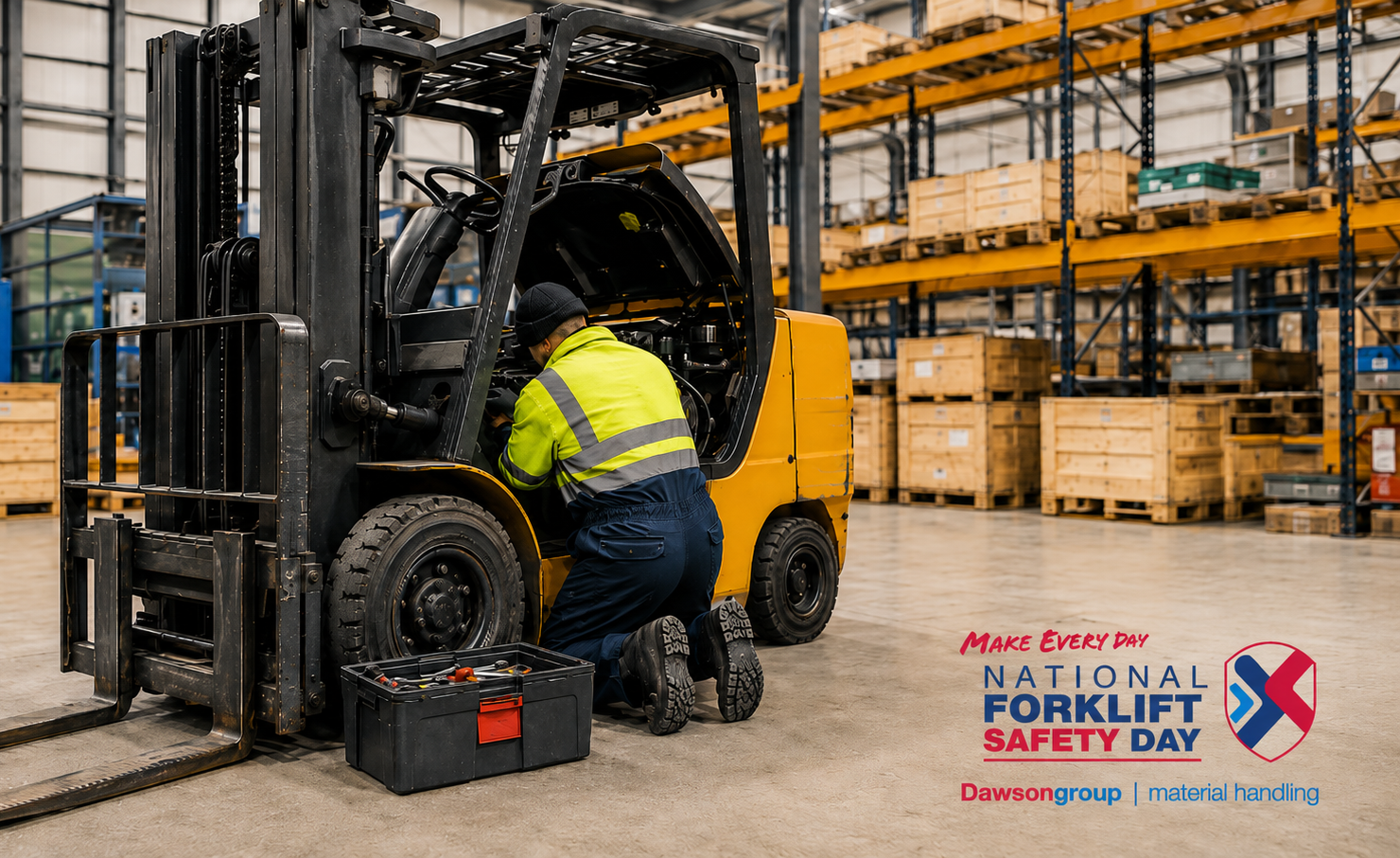
Why Technician Safety Should Be Part Of Every Uptime Strategy
Forklift technician safety is essential not only for protecting people, but also for keeping operations moving. Between 2019 and 2025, UK forklift suppliers lost, on average, more than 1,000 working days per year due to workplace injuries. UKMHA data also shows that 85% of these incidents happened while technicians were working at customer premises, highlighting the important role customers play in creating safe working environments.
For businesses relying on material handling equipment every day, technician safety should be seen as part of an uptime strategy. When engineers can access trucks safely, diagnose faults properly and complete maintenance without unnecessary risk or delay, equipment can be returned to operation faster and with greater confidence.
Implementing Safe Practices Beyond the Trucks
The data also shows that technician safety is not limited to the moment an engineer is physically working on a truck. According to UKMHA, 30% of incidents occur when technicians are not even physically working on the MHE, while more than 20% of injuries resulting in time off work are linked to manual handling failings. This reinforces the importance of the wider working environment, from clear access routes and safe parking areas to removing unnecessary obstructions before work begins.
With many technician jobs being carried out at customer sites, safe working conditions are vital. The accessibility, safety and environment where technicians are carrying out their work can directly influence how quickly a truck is repaired, serviced and returned to use. In support of UKMHA’s National Forklift Safety Day and its focus on technician safety, we explore how safer sites can help protect engineers while reducing avoidable downtime.
The Important Role Customers Play
The conditions customers create on site play a vital role in enabling safe, efficient and effective preventative maintenance. The HSE offers guidance on the shared responsibility of keeping technicians safe. Before the technician arrives, the truck should be parked in a clear, level, well-lit area, away from active traffic routes where possible. The working space should be free from pallets, stock, debris or other obstructions, giving the engineer enough room to inspect and repair the equipment safely.
Clear fault information also makes a difference. Details such as where the issue started, warning lights, unusual noises or changes in performance can help the technician diagnose the problem more quickly and reduce the likelihood of repeat callouts.
Prevention Powers Productivity
Preventative maintenance is one of the most effective ways to reduce the risk of unexpected downtime, but it only delivers value when it can be completed properly. When technicians have safe access, enough time and the right working conditions, they are more likely to identify small issues before they develop into costly breakdowns. Daily checks support this process, by regularly assessing the below, operators can help identify potential issues early and give technicians useful information before the inspection begins.
Some key daily checks are:
- General wear and tear on the truck (bumps, scratches, dents)
- Tyre conditions
- Forks
- Fluid levels
- Battery charge levels
- Leads and connectors
In the last 12 months our engineers have completed an average of 812 service and repair visits across customer sites, highlighting the importance of safe working environments every time a technician attends a site. With a first-time fix rate of 93%, 61% of those being planned maintenance, helping customers reduce repeat callouts and getting equipment back into operation faster.
These results are made possible when technicians have safe access, clear fault information and the right conditions to complete the job thoroughly.
Technician safety is a shared responsibility, and the UKMHA’s Lost Time Injury Report makes clear why is matters. With the majority of reported incidents taking place on customer premises, safe access, clear working areas and good site preparation are essential to protecting engineers and keeping operations moving.
Productivity Starts with Safety
When working as a partnership to keep everyone safe, maintenance can be completed more effectively, and equipment can be returned to operation with fewer delays. For businesses relying on material handling equipment every day, creating safer conditions for technicians is not just the right thing to do, it is the practical way to support uptime, reduce disruption and protect productivity.
At Dawsongroup material handling, our engineers work in partnership with customers to keep people and fleets safe, compliant and operational. By combining planned maintenance, clear communication and safer working environments, businesses can reduce downtime risk while protecting the people who keep their operation moving. To find out how planned maintenance and proactive support can help reduce downtime across your site, speak to our team today.
The decision to invest in telehandlers, wheel loaders, or material handlers ultimately depends on your operation’s specific needs. Each of these assets brings a unique set of benefits to the table, and by carefully assessing the type of materials handled, the volume of material processed, and the space available at your site, you can make an informed decision that optimises both efficiency and safety.
Our team of material handling experts are available to help you make the right decision for the future of your operations – get in touch.